The same question keeps landing in my DMs. It wears different costumes, but underneath it's always this: "I want to use AI properly, but what about my privacy? What about my life's work?"
Fair question. It kept me on the sidelines for a while too.
So here's my actual setup. Three things, and each one used to be a myth I had to get past before I trusted it enough to let AI become my 2IC (second in command, for the non-Aussies).
Myth one: "Anything I type becomes training data"
This is the big one, and it comes down to one distinction: free versus paid.
On free plans, your chats can generally be used to train future models, depending on your account settings. Read the terms of your specific tool if you want the fine print, but assume the default is on until you've checked.
Paid is a different game. Paid chat plans give you a no-train setting you control, and defaults have shifted over the years, so it's worth thirty seconds to find that toggle. And the developer layer, the API that tools like Anthropic's Claude Code, OpenAI's Codex and Google's Gemini CLI run on, goes further. At that layer, not training on your data is written into the contract. That's exactly why the serious agentic tools are covered. They sit on top of it.
This is genuinely why I pay for my subscriptions. The terms are the product.
Usually under the settings → privacy section of your preferred tool. One switch.

Exposed to protected. That's the whole difference, and it's one setting away.
Myth two: "It'll have access to everything on my computer"
Best believe you decide what it does and doesn't have access to.
The analogy I keep sharing with friends is a sandbox. The same way you set the boundaries a toddler gets to run around inside, you set the boundaries of what the AI can touch. Which room they can run around in, and which toys they get to play with.
Here's what that looks like in practice. At the start of every project, point the tool at one folder. That folder becomes its entire universe. Your NDA client work, your tax documents, your personal files all live outside the sandbox, and the tool has no way to reach them. This is how these tools are designed to work, and you hold the keys.
And be proactive about what goes in. No credit cards, no passwords, no confidential client data inside the working folder. Simple hygiene, massive difference.
One honest caveat while we're here. The big providers hold themselves to serious security standards, and the good ones carry proper compliance certifications. But every technology company on earth has had gaps. Canva and Uber have both been breached, and they're giants. So don't outsource the judgment. Discern what the tool genuinely needs access to, and for the crown jewels, the patent, the secret recipe, the core IP your whole business stands on, keep them out entirely while you're building trust in your own protocol.
Screenshot of my own sandboxes below, for Claude and Codex.
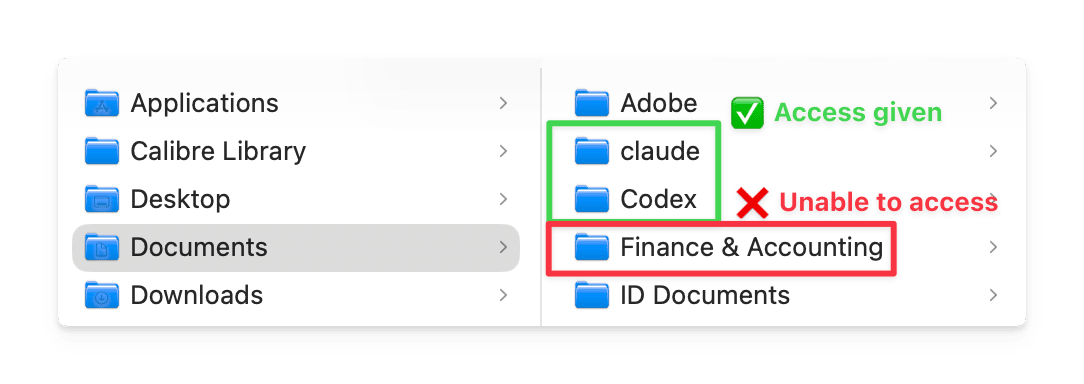
It never has access to my financial or accounting records unless I select specific files and move them into my sandbox folders myself.
Myth three: "I'll be locked into whichever platform I pick"
Now this one is half true. But only if your work lives where most people leave it.
Think about it. Your best thinking, your brainstorms, your breakthroughs, your project docs, all sitting in hundreds of chat threads down the left-hand side of one app. I'd bet you've never once felt inspired to go through and export them one by one. So your genius stays stuck inside a tool you have to keep paying for.
Fortunately, some very savvy third-party developers have built browser extensions that pull the gold out of your chats in a couple of clicks. Links to install each one below, non-affiliated, just the ones I've personally used to extract years of gold sitting inside chat threads.
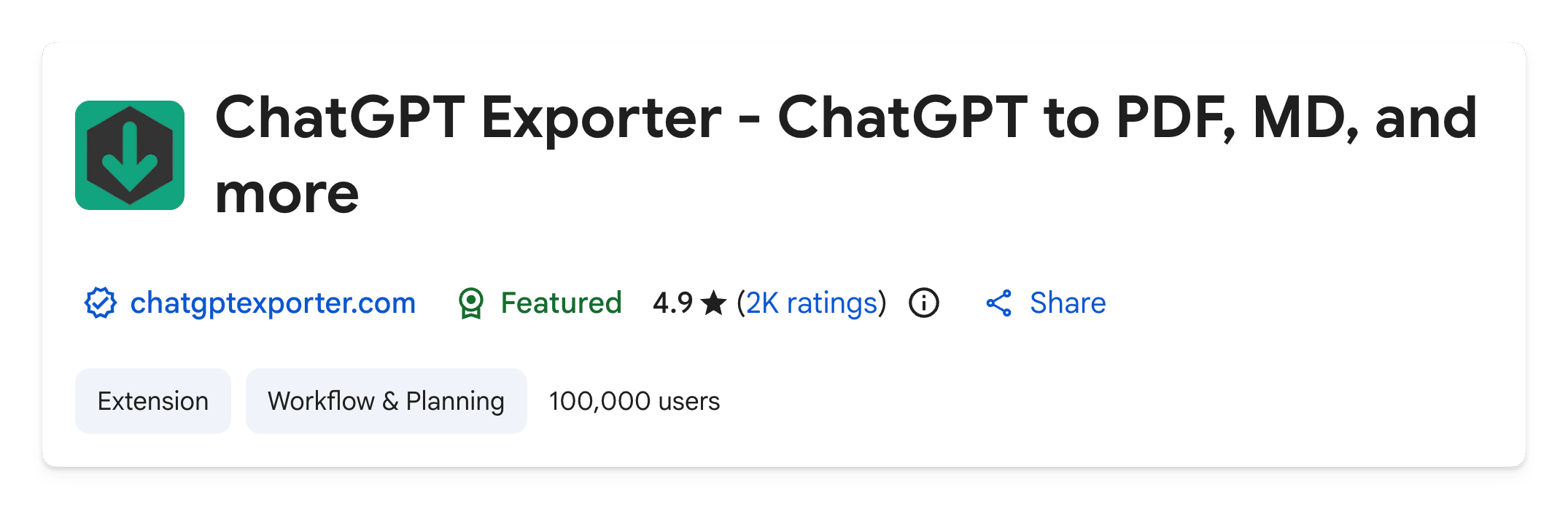
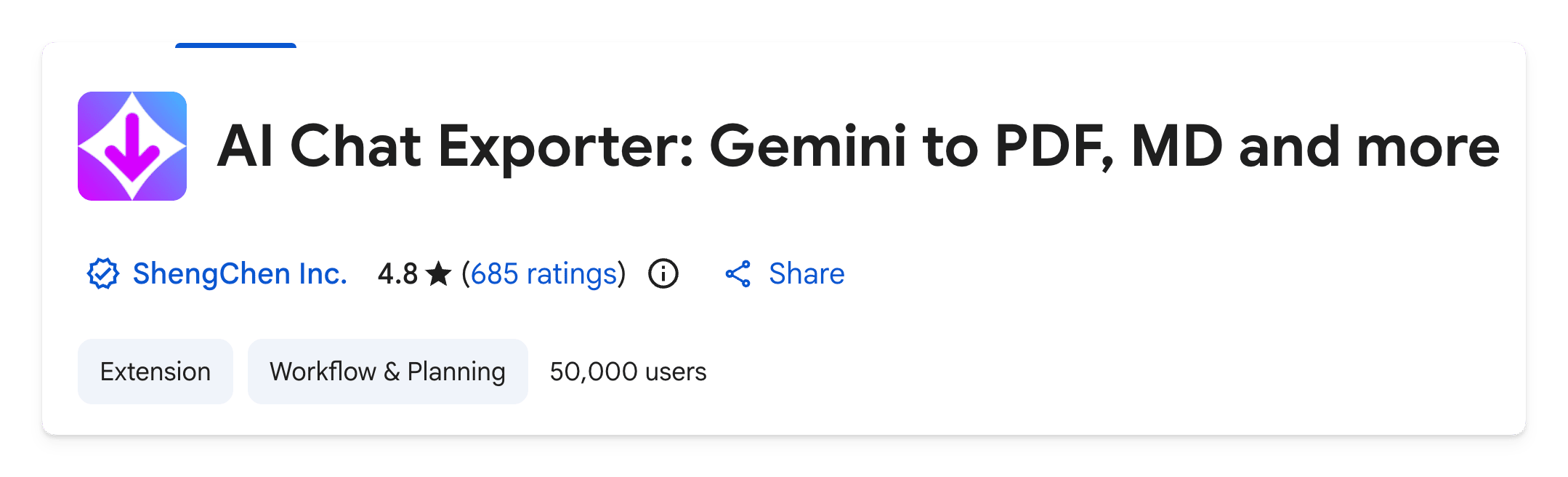
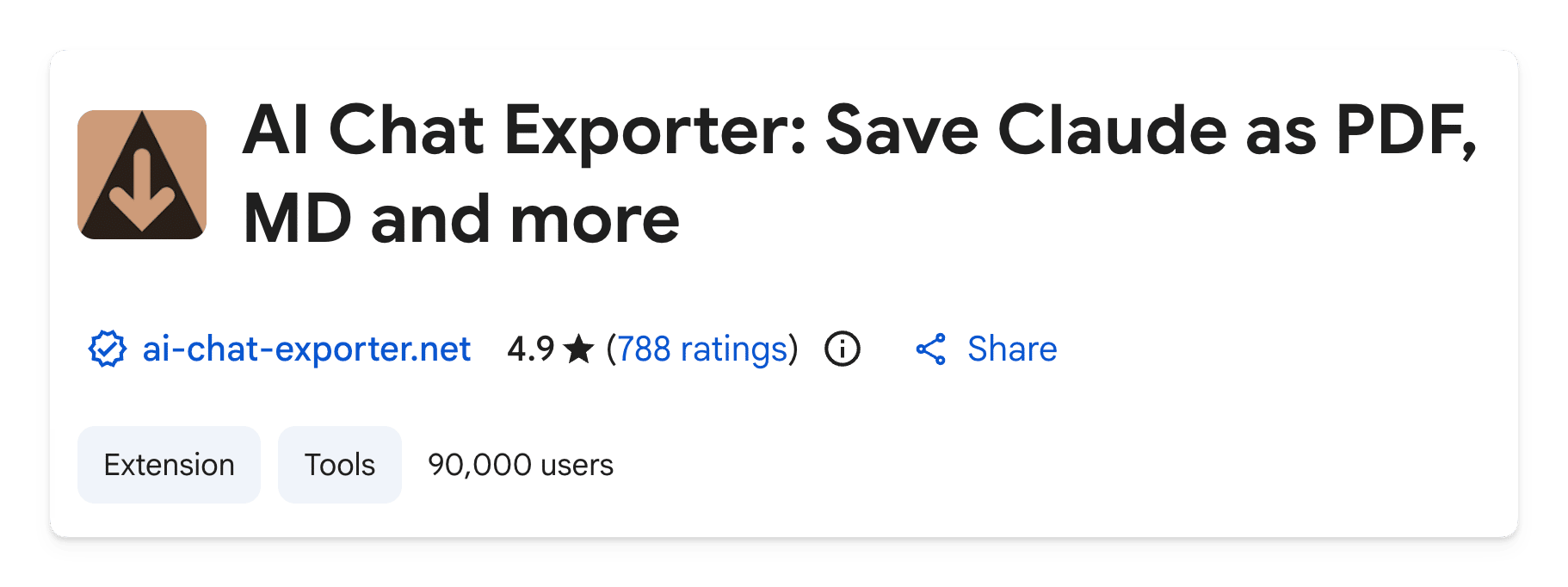
For ChatGPT. For Claude. For Gemini. Markdown and text exports are free on all three. They're independent third-party tools rather than official products from OpenAI, Anthropic or Google, so apply your own judgment on anything sensitive.
Then the pro tip that changes everything: don't just export, organise. Save the keepers as markdown files in context folders on your own machine. One for your business, one for your content, one for whatever you're building next. Now any tool, today or in five years, can be pointed straight at those folders and pick up where the last one left off.
You're no longer beholden to a single platform. Your life's work lives with you.
What actually deserves your worry
Here's the thing. Once those three habits are running, the training question is mostly handled. The real risks are far less glamorous, and they're the three I actively manage:
1. Permission scope. An agent pointed at your whole desktop can read files you forgot existed. Old contracts, saved passwords, tax records. The fix is the sandbox rule above. One dedicated working folder per project, and the agent only ever operates inside it. This single habit does most of the protective work on this page.
2. Loose secrets. Passwords and API keys sitting in plain text files are a real liability, AI or no AI. Before you let an agent loose in a folder, sweep it for anything that looks like a credential and move it out.
3. Backups. A laptop plus one cloud sync is two copies. Your life's work deserves three, with one offline. A dead drive or a ransomware hit is statistically far more likely to hurt you than any training scenario ever will.
The unsexy stuff is the stuff.
And for the genuinely sensitive slice, the unreleased IP, the strict-NDA client work, there are local models that run entirely on your own machine, so files never leave it. Most work doesn't need that, and the cloud tools are still meaningfully ahead in capability. Sensitivity decides, and most of what you do sits nowhere near that line.
The whole setup in three lines
Paid, so my data isn't trained on. Sandboxed, so I decide exactly what it sees. Offline files, so my IP lives on my desktop as portable markdown files I own, and every platform only ever sees a copy of what I chose to show it.
That's it. That's the entire system, and it's the reason I can hand AI real responsibility with real peace of mind.
Do this this week
1. Go paid on your main AI tool. Check the data settings while you're in there and turn training off wherever you see a toggle.
2. Create one working folder for your current project. Point your AI tools at that folder and nothing else.
3. Sweep it for secrets. Passwords, keys, card details, anything you wouldn't paste into a prompt. Move them out.
4. Install the exporter for your platform. Pull your ten best chats out as markdown and sort them into two or three context folders.
5. Add a third backup copy. One that's offline or can't be quietly overwritten. Your future self will owe you one.
An hour of work, maybe two. And the fear that's been keeping you on the fence stops running the show.
Pro tip: tell your clients
One more, because it came up at a workshop I ran recently and it's too good to leave out. If client work touches your AI setup in any way, calls being transcribed, project files sitting in your working folder, their info shaping how you deliver, tell them upfront.
I do this with every client now. It's written into my terms: what gets transcribed, how it's stored, how long I keep it, and that they can review it or opt out any time. I haven't had a single person push back. Most are genuinely impressed I raised it first, and a few have laughed and said they assumed I was using AI anyway.
The regulation hasn't caught up with the technology yet, which means good operators set the standard themselves. Nobody likes feeling sideswiped by tech they didn't know was in the room. Framed proactively, the exact same disclosure becomes a trust builder, and it's always worth doing.
The bottom line
Three myths kept me on the sidelines. Three habits got me off them. Paid, so the terms protect me. Sandboxed, so I hold the keys. Offline, so my life's work lives with me and not inside a platform.
The fear is loud, and the fix is boring. Then get moving, my friend. The sidelines are the most expensive seat in the house.