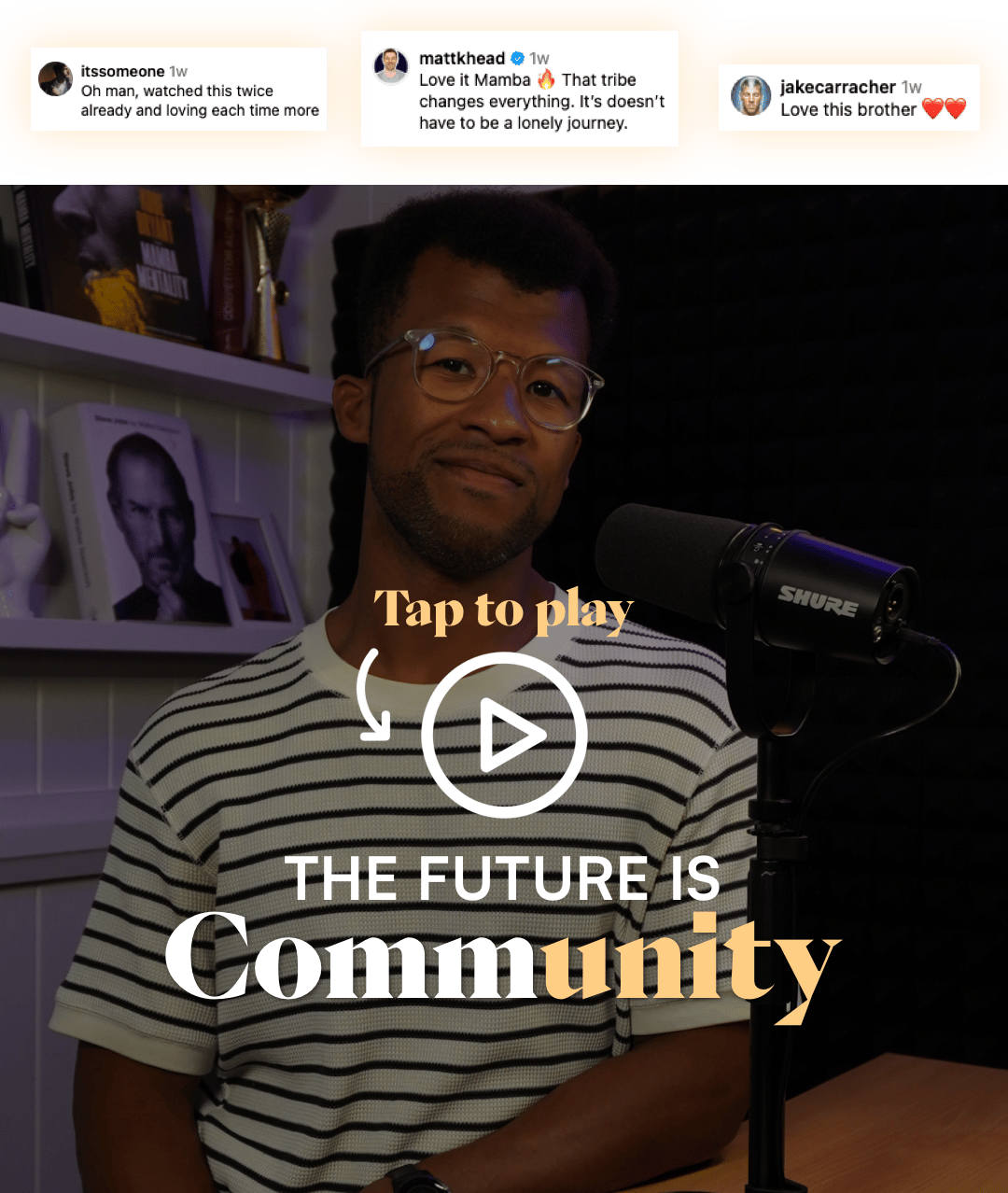
When I left my full-time role at Google at the start of 2021 to go full-time into my video content agency ('Mamba Moments'), I had no idea how isolating and mentally exhausting it would be to run a one-person business.

What I made up in efficiency and execution (i.e. not having to wait/rely on others for approval or progress) I completely lost in support, accountability and connection.
So after attempting to do it alone for nearly 2 years...
I completely burnt out.
When you can't find it, create it.
While I did sign up for a lot of courses, programs and masterminds, I found that most of them were based in the US (or international timezones that didn't work with my schedule) or weren't entirely aligned with what I was building.
So it dawned on me.
If I couldn't find the community I was looking for...
I had to create it.
But the problem was...
It'd have to be online.
And I had no clue how to form a thriving online community.
Except...
If I did it before for an offline community...surely I could do it online?
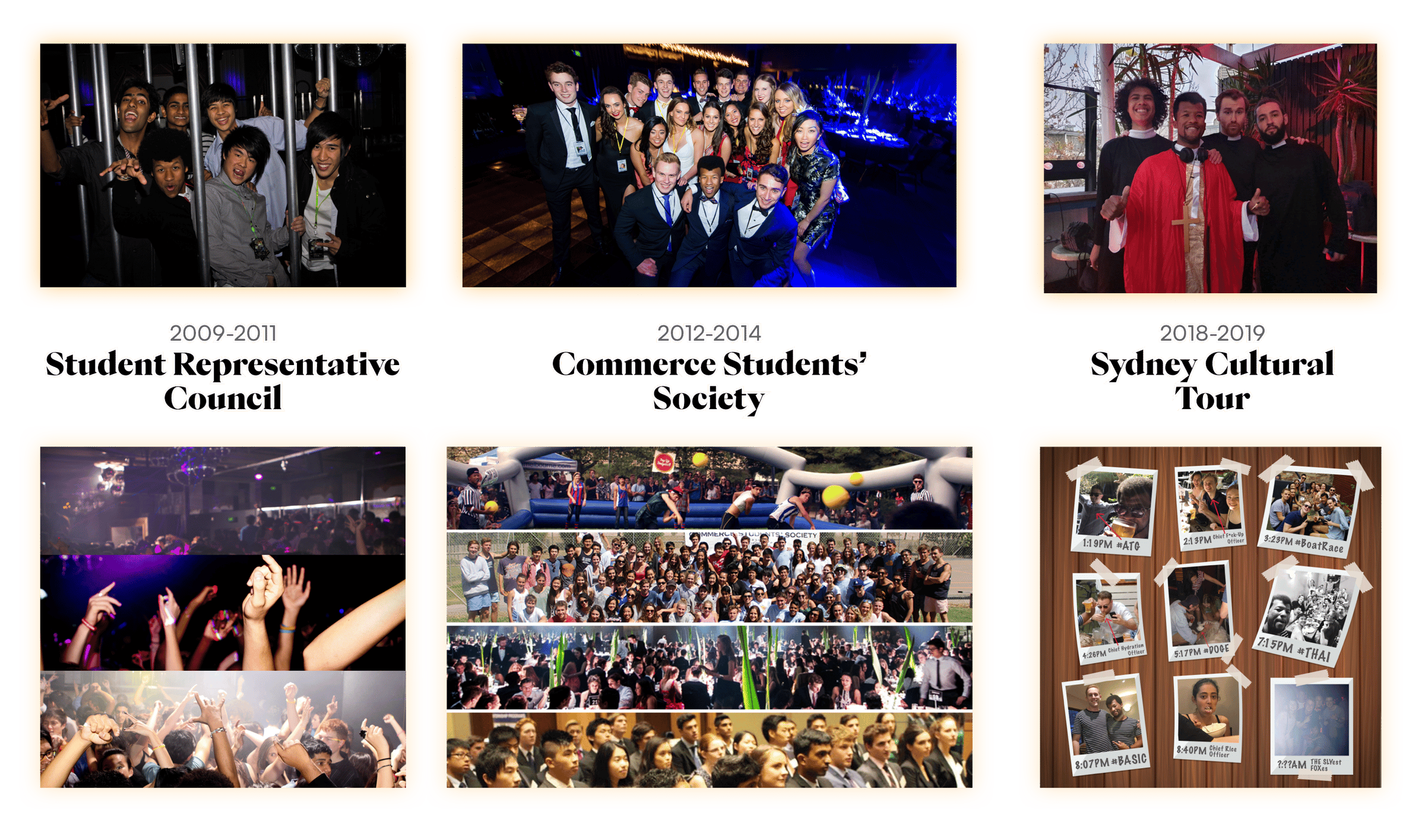
I realised that I'd already been a part of or led a variety of communities that were focused on organising and hosting social events #PartyHard
- High School : Student Representative Council @ Melbourne High School
- University: Commerce Students Society @ The University of Melbourne
- Workplace: The Sydney Cultural Tour @ Uber Australia
So I thought - if starting from scratch...
- what key steps would you need to take?
- what are the principles that drive people to want to join a community?
- what could I carry over from my experience of organising event-based communities?
It starts with relationships
I realised that what made each of those communities thrive was that we had remarkable relationships with everyone within them.
And it always starts by having a focus on knowing whoyou want to serve and howyou can serve them.
I committed to posting content directed towards digital solopreneurs on LinkedIn to serve and support those on a similar journey with business and content-related tips and tricks.
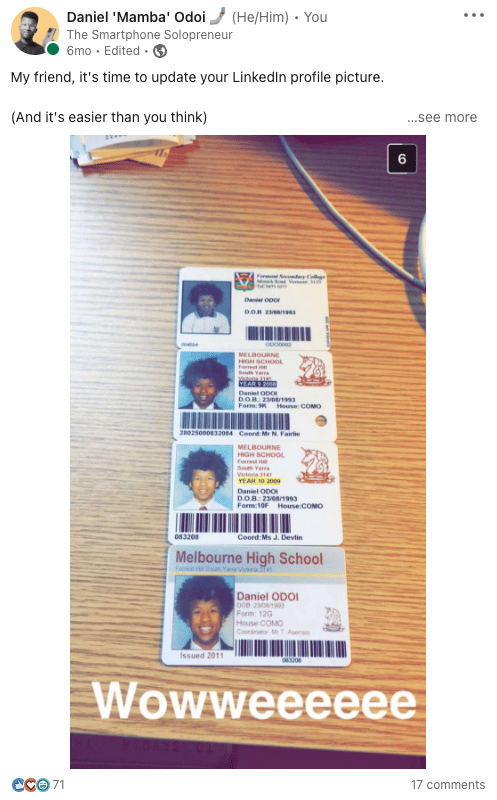
I started getting a lot of engagement through comments, DMs and questions.
So I jumped on dozens of (free) calls to serve and support others
I listened.
I learned.
And I suddenly realised that I was already in the process of forming a community.
Because when I looked at the common thread amongst the messages, the common challenge was...
A lack of community.
So I took this as a sign from the universe and decided to form my own.
Just a simple, free Slack community for accountability, feedback and support for a handful of digital solopreneurs.
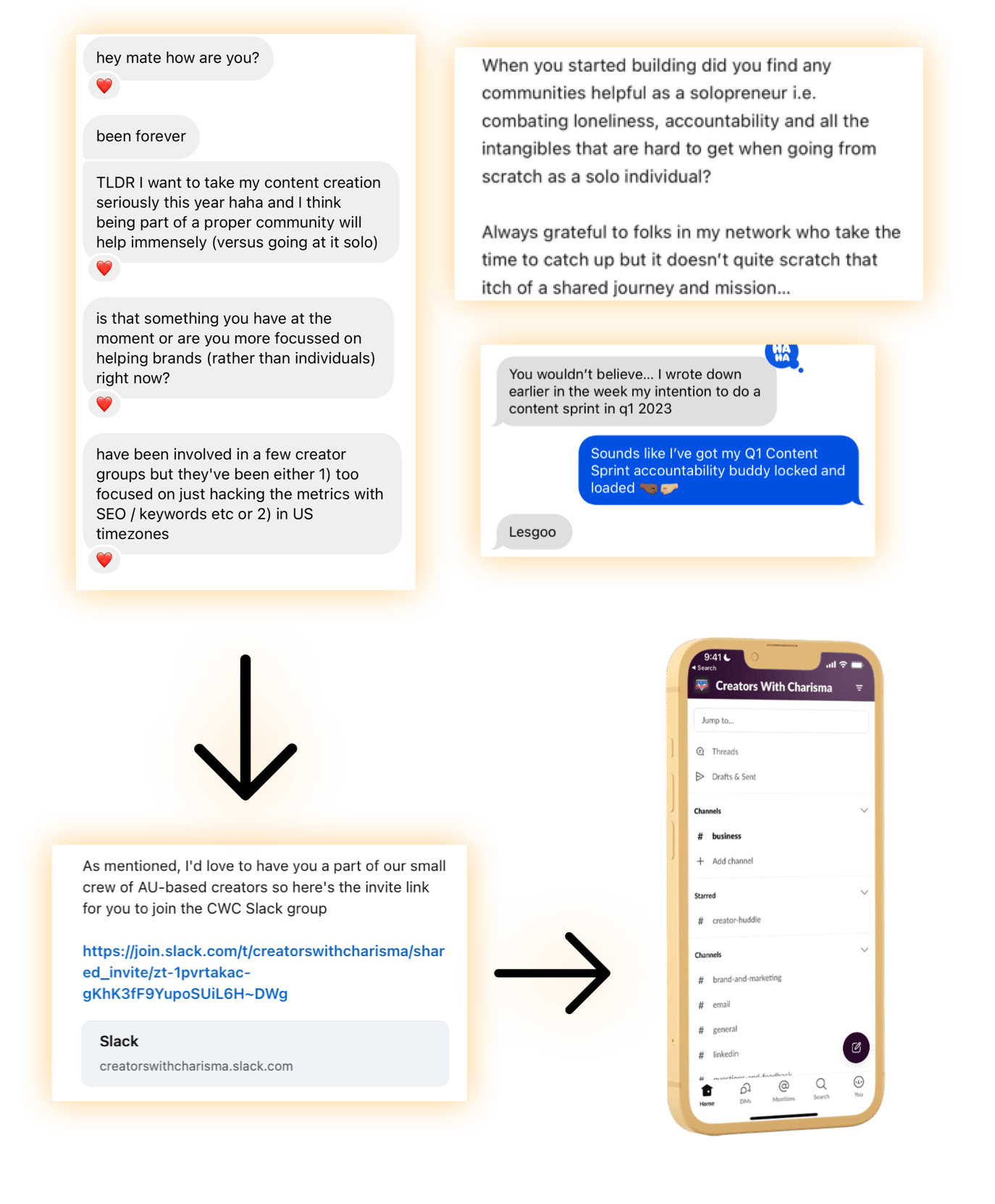
And that's evolved into thriving community-based cohorts. What's even better is that the legends in the community have also gone on to form their own communities following a similar series of steps.
Here are the 3 key steps you can follow to kick off your own thriving community:
🎁 Contribute
💡 Figure out who you want to invite to your party, find out where they hang out and build genuine 1:1 relationships by leading with service & support.
Start by getting clear on your "ideal guestlist" (i.e. target audience) that you'd like to form around you.
Then figure out where they're currently spending their time (attention) online.
Finally, start making valuable (and free) contributions to those individuals by supporting them through
- Content
- Consultation; or
- Any other methods of serving and supporting them
Example: Paolo Garde
Paolo Garde, a Filipino-born tech professional, felt compelled to help the "younger" version of himself when he recognised that Filipinos are massively underrepresented in the tech startup industry, especially in Australia.
So he created a roadmap to position himself (on TikTok) in such a way that his content would surface to his ideal guestlist.
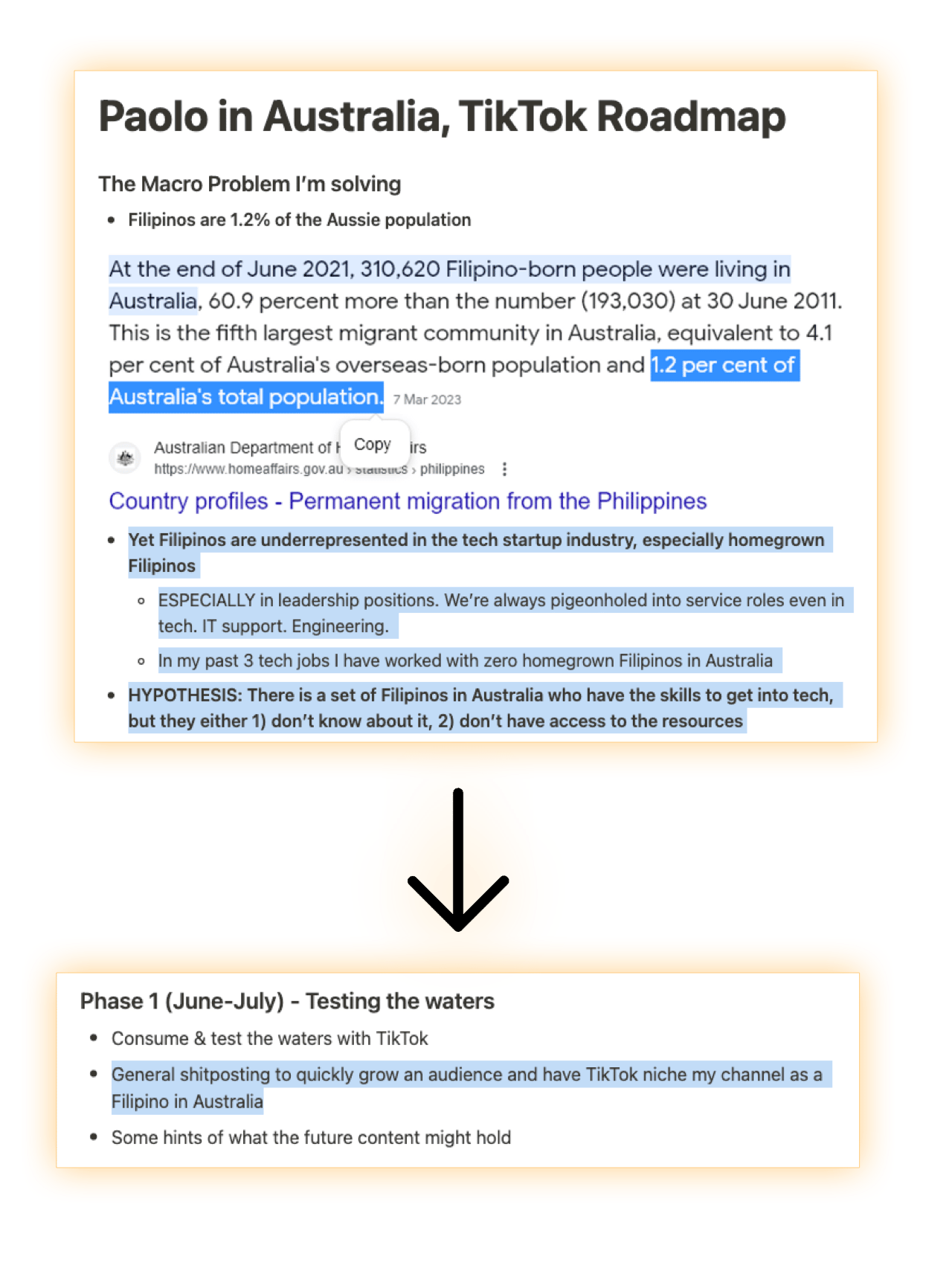
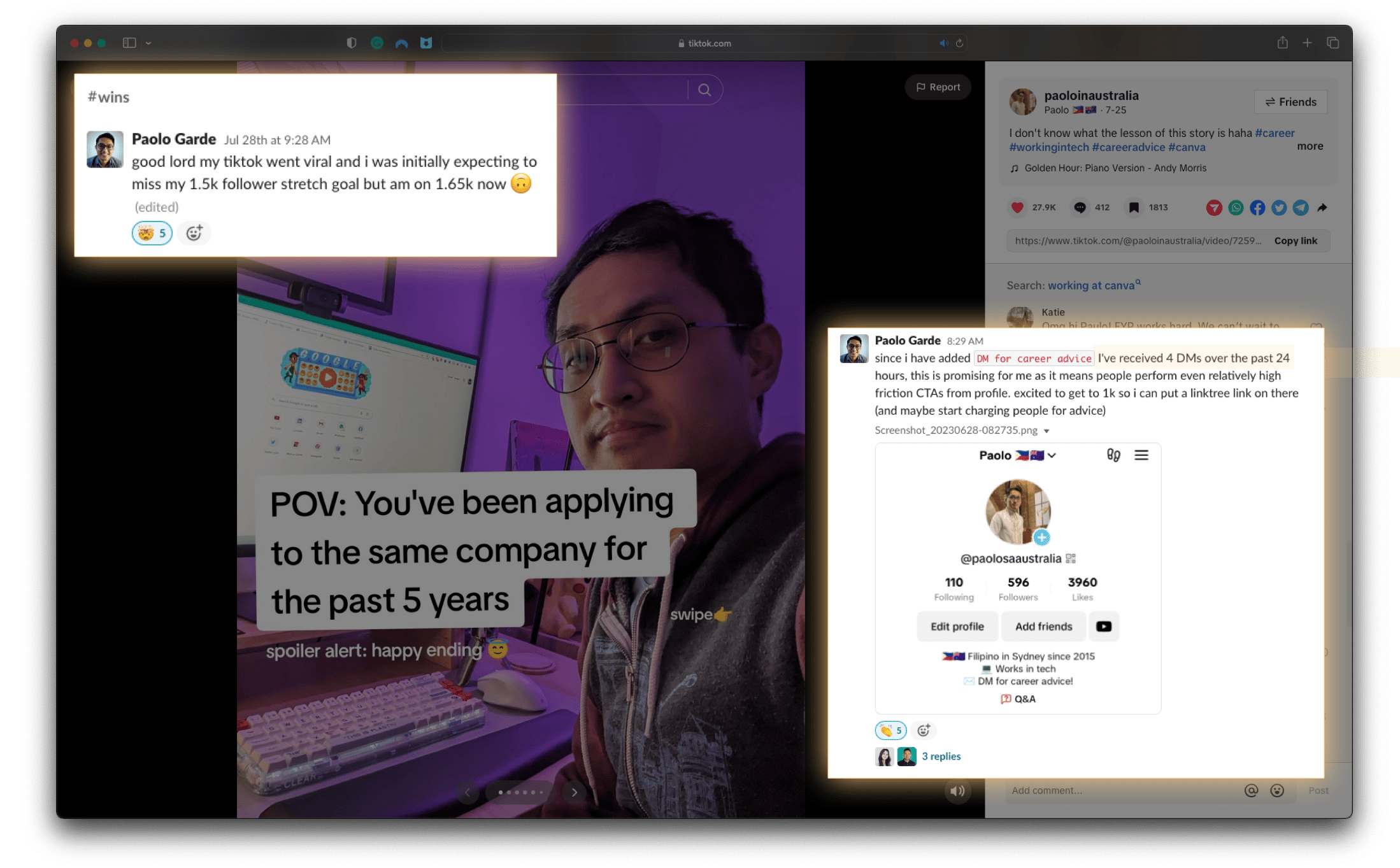
And after consistently posting highly-targeted & well-researched content for a Filipino audience, his TikTok took off, and he found traction with his target audience.
He then went a step further and offered to provide (free) career advice for those that DM'd him.
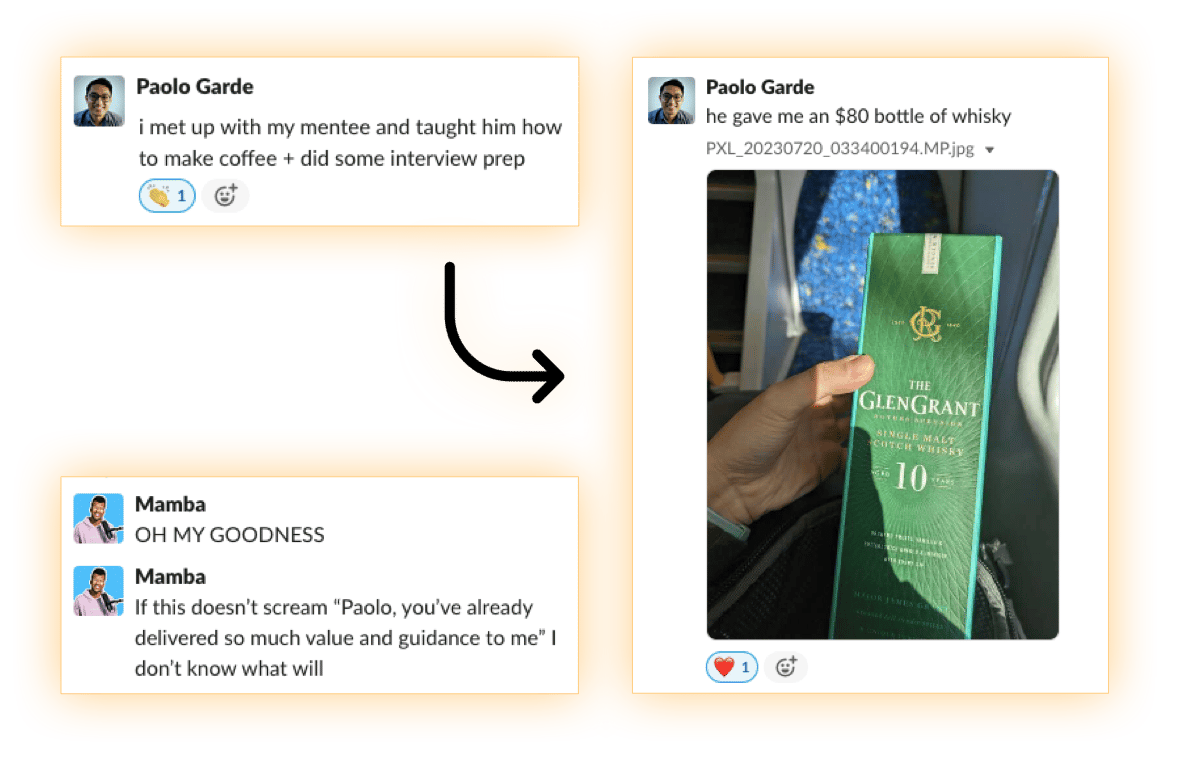
As a result, Paolo was able to take it even further and meet up in person with a mentee, helping him with interview preparation! And his mentee was so moved by his support that he gifted him a bottle of whisky! 🥃
At this stage, you've now attracted an audience that resembles the community you'd like to form.
Now it's time to set-up your venue and invite them all in, so they can:
🫱🏼🫲🏽 Connect
💡 Gauge what kind of party your community wants, set up your venue and send your invites!
Listen to your community to understand what kind of community they'd like to be a part of.
- Where do they want to hang out? Discord? Slack? Facebook Groups?
- How do they want to hang out? Asynchronous messaging? Live video calls?
- What do they want to do when they hang out? Learn? Connect? Support?
Even if you've got conflicting responses from your early members, either go with the majority of preferences or use your judgement based on all the 1:1 conversations you've been having.
Example: Cindy Moon
Cindy Moon pivoted her TikTok content to become more of an authentic reflection as a "20-something" facing the challenges of adulting with the added overwhelm of having ADHD and navigating a meaningful career path.
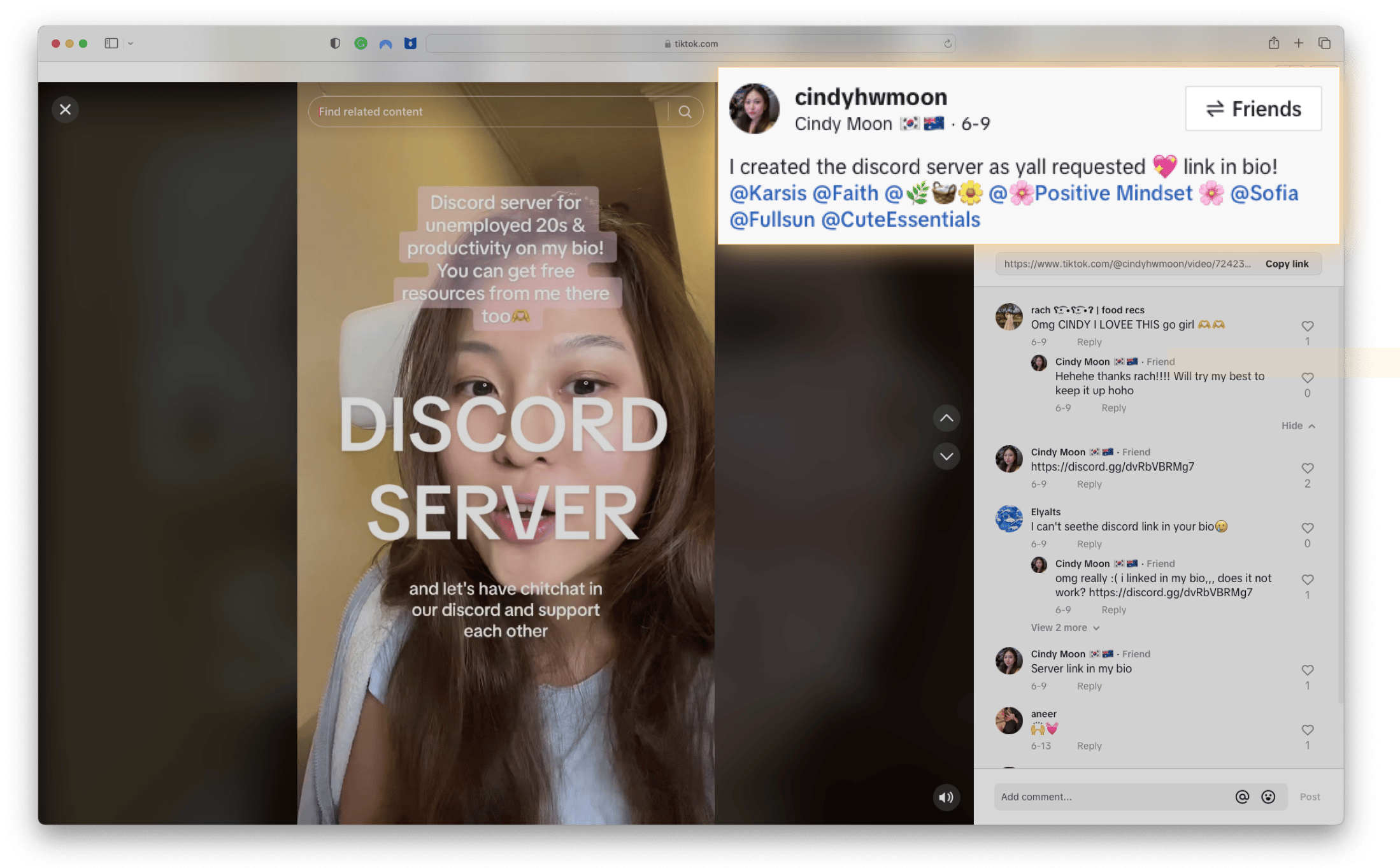
When her TikTok content started going viral, her audience started commenting that they wanted to connect on a different platform, away from algorithms.
After reading dozens of suggestions in her comments, Cindy asked her audience if they'd be willing to join a private Discord server, as a number of followers suggested.
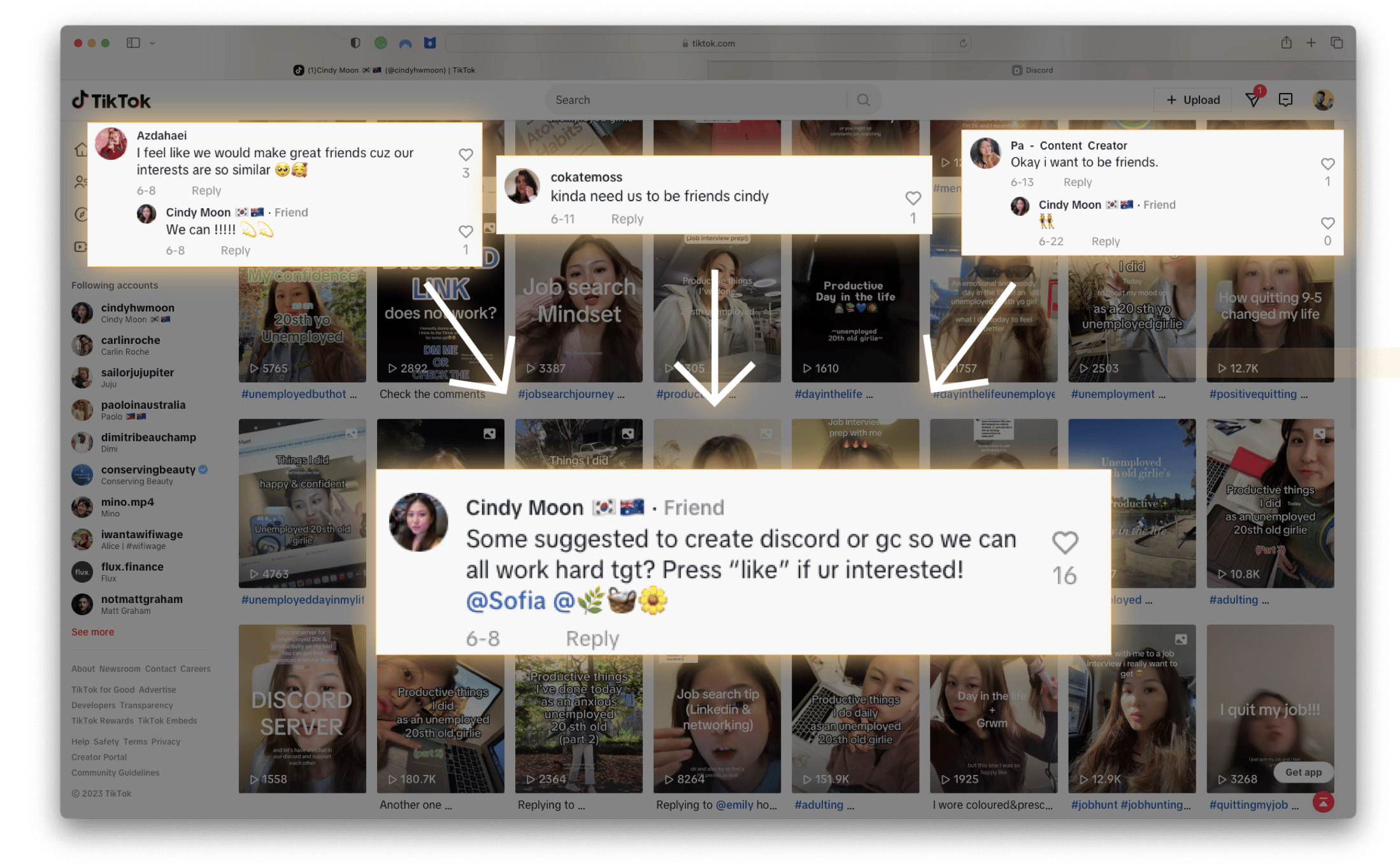
After an overwhelmingly positive response, she launched it!
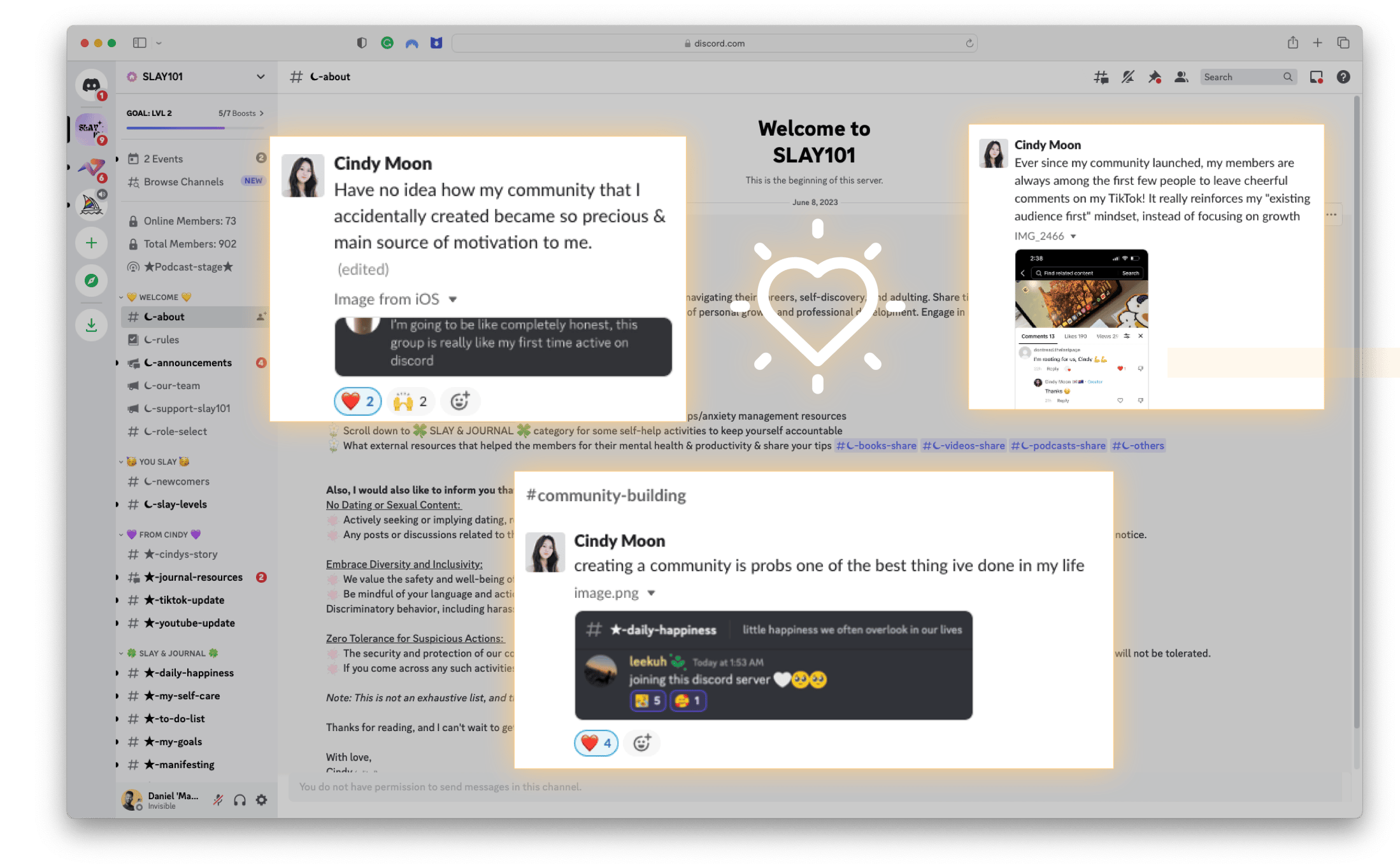
As of now, her community has over 900 members, as a result of Cindy's relatable and engaging TikTok content that continues to organically attract more like-minded members. In her own words:
"...creating a community is probs one of the best things ive done in my life"
- Cindy Moon
And in our third and final step, it's finally time to...
🎉 Celebrate
💡 Make everyone feel welcome, recognised and celebrated
Once you've got people through the door, they need a reason to stay.
And in my experience, I've learned that 2 of the most important pillars of being in a community are having a
- Sense of belonging ; and
- Sense of recognition
So do the equivalent of giving everyone a massive hug (or high-five) when they walk in the front door, and make a massive effort to celebrate (and showcase) every win they have while being in your community.
Not only does it make them feel valued, but it'll increase the likelihood of them spreading the news and inviting others to join the party!
Example: Michael Lim
Michael Lim, a 3 x award-winning social entrepreneur and part-time online creator, took inspiration from Cindy and kicked off his own free Social Procurement Social Club for other professionals working in social procurement.
He serves and supports them through a private Slack community, hosts a weekly Zoom call, and shares insights, summaries and wins from each call with his audience on LinkedIn.
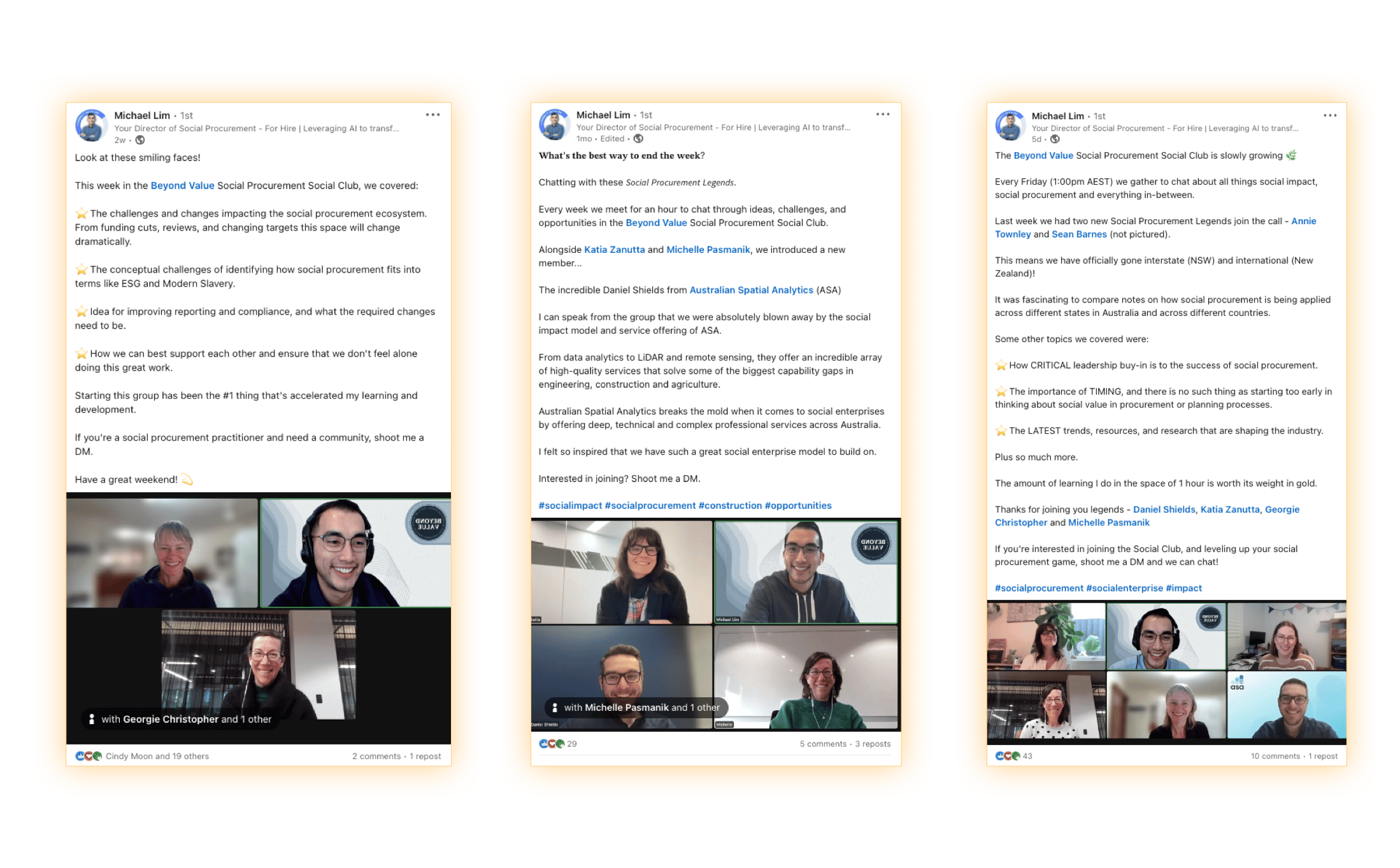
By publicly celebrating those in his community on LinkedIn, he's receiving a continual flywheel of DMs from others asking to join his community as well!
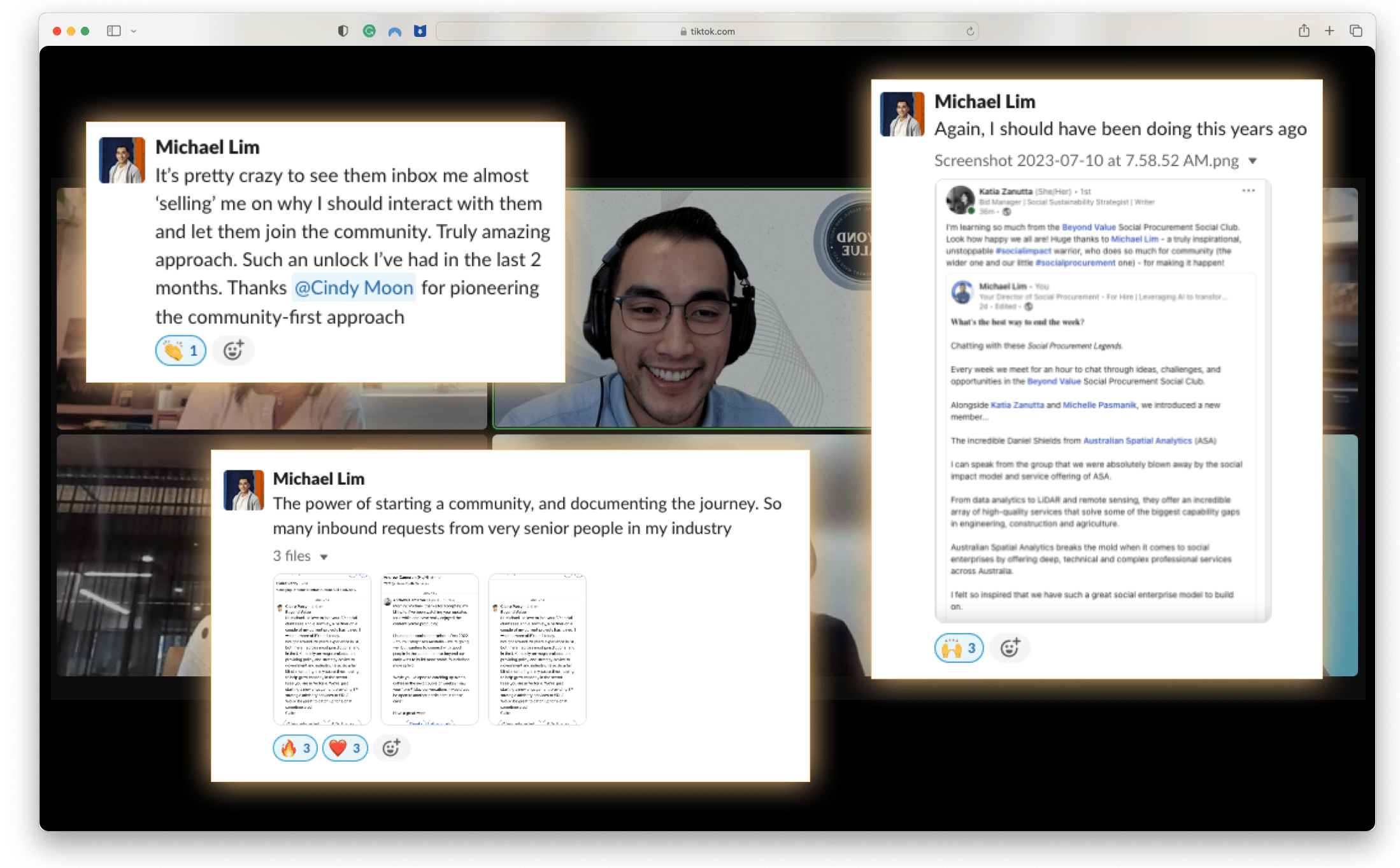
When reflecting on the power of having a community-first approach, Michael messaged the group on Slack with:
"Again, I should have been doing this years ago"
- Michael Lim
So to form your own online community...
-
Contribute : Decide who you want to invite to your party, find out where they are, and start serving and supporting!
-
Connect: Gauge what kind of party your community wants, set up your venue, and send out your invites!
-
Celebrate: Welcome, recognise and celebrate everyone. Share stories, achievements & milestones to attract more like-minded party people through the door!
If you want to hear more about this journey, I've shared a video on Instagram called The Future Is Community that dives deeper into how forming a community completely shifted the trajectory of my business (and life!).