It's one thing to commit to content.
It's another thing to know how to do it.
If you're like many creators, you might feel a little unsure of how to film yourself. And I know that feeling well.
Filming yourself can feel:
- Egotistic or self-centred
- Awkward, unnatural and contrived; or
- Embarrassing, especially if you're doing it in public
I've faced these feelings countless times while recording myself. And if I'm honest, I've learned how to move beyond those feelings by recording myself thousands of times over more than a decade.
But I'm not going to suggest the same approach for you.
Of course, mastery comes from long-term consistency. But if you can't start and, more importantly, continue creating, you'll never do it for long enough to reach long-term mastery.
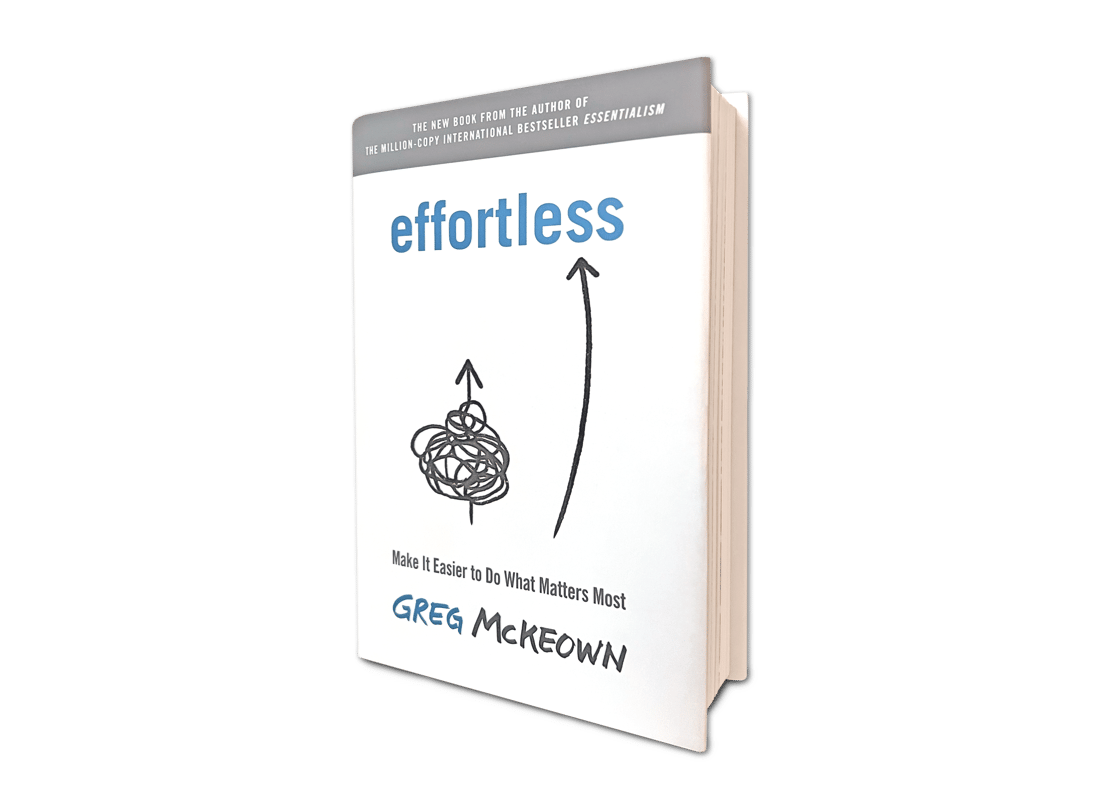
After reading Greg McKeown's Effortless, I've entirely changed my philosophy on supporting clients with content creation.
And it's all by asking this question every time something feels hard:
"What if this could be easy?"
— Greg McKeown
This approach of "inversion thinking"—basically flipping a situation on its head—invites us to creatively consider alternative options to what we're currently doing. As we tend to get stuck in familiar patterns and grooves, like ski paths carved into snow, we don't zoom out enough to question if our approach is still the most efficient or effective.

When helping clients level up their content creation, I focus on removing as much physical, mental, emotional and technical friction from their process.
Because having friction with anything you do in life is like trying to drive a car with your handbrake engaged. Sure, you might be able to inch forward, but it's a painful process (and also unnecessary).

If you've struggled to find a content creation process that feels effortless, it's probably because you've faced recurring challenges that made it harder than it needed to be, or you didn't know how to simplify it.
In this guide, I'm breaking down the solo content creation framework I'd use if I was a beginner starting today.
1. Film Your Talks
Do you need a script when talking with friends, customers or clients?
No.
That's because those conversations are natural. You don't have to think about them because you know and are comfortable with whatever you're talking about. It just...flows.
It's...effortless.
So why not capture content when you're in this effortless state?
If you've ever delivered a speech in front of a classroom or colleagues, you likely went through:
- Scripting and outlining
- Using cue cards or PowerPoint; or
- Practising over and over again
I'm not against preparation. But if you feel you need to do this for every piece of content you create, you're making it harder than you need to be.
Here are 2 everyday situations where you can capture yourself talking in an effortless state.
1. On a Walk
There's a reason why Steve Jobs, arguably one of the most creative minds of the last century, made his meetings...walking meetings.
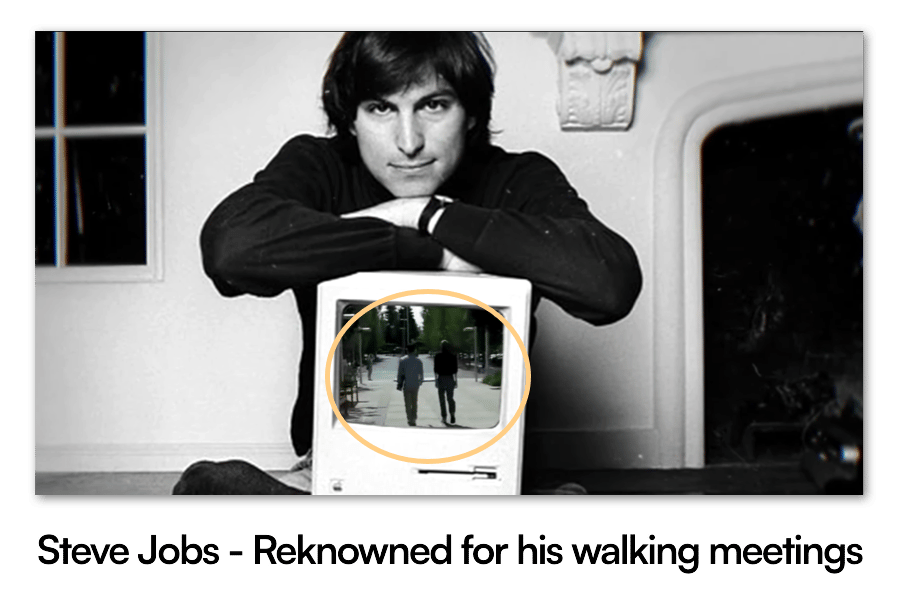
He often remarked that the best conversations and business ideas came from walking meetings—not seated or static ones.
And the research backs it up. Physical movement, such as walking, increases the oxygen supply to the brain and stimulates neural activity, promoting creativity and cognitive flexibility.
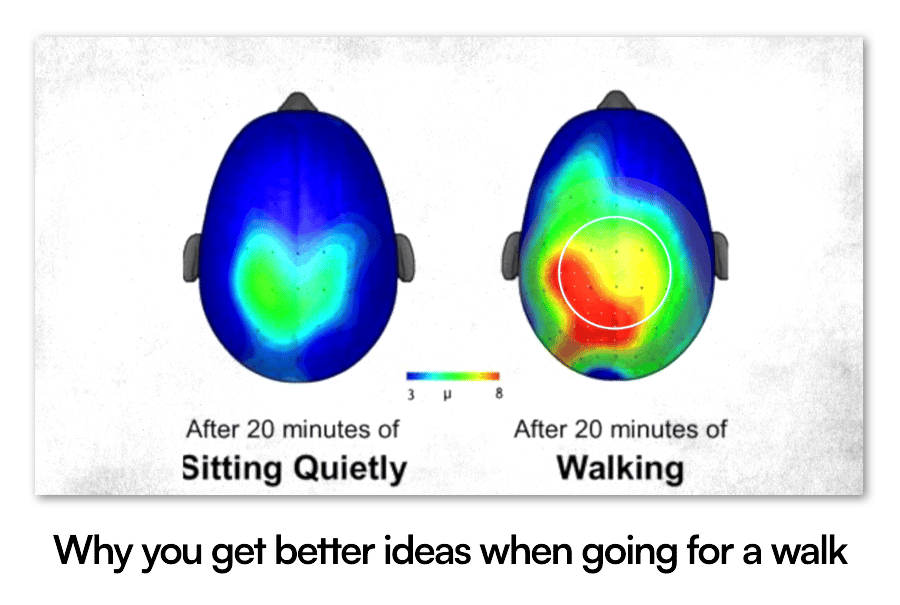
This enhances your idea generation and problem-solving, which is why you'll often have 'a-ha moments' that solve challenges you've been sitting on for hours, days or weeks.
In short—when the body moves, the brain grooves.
So when the idea is hot, whip out your smartphone camera, hit record and start talking.
As spontaneous ideas (and the energy behind them) fade over time, capture them in the moment. Yes, you may stumble over your initial words, but you'll quickly warm up, and your delivery will be much more natural, confident and animated.
Fellow creator and Dutch-based designer Peter Kuyt set a challenge to start sharing branding lessons and ideas with his community by recording himself during his daily walks and coined the series #talkingthewalk.
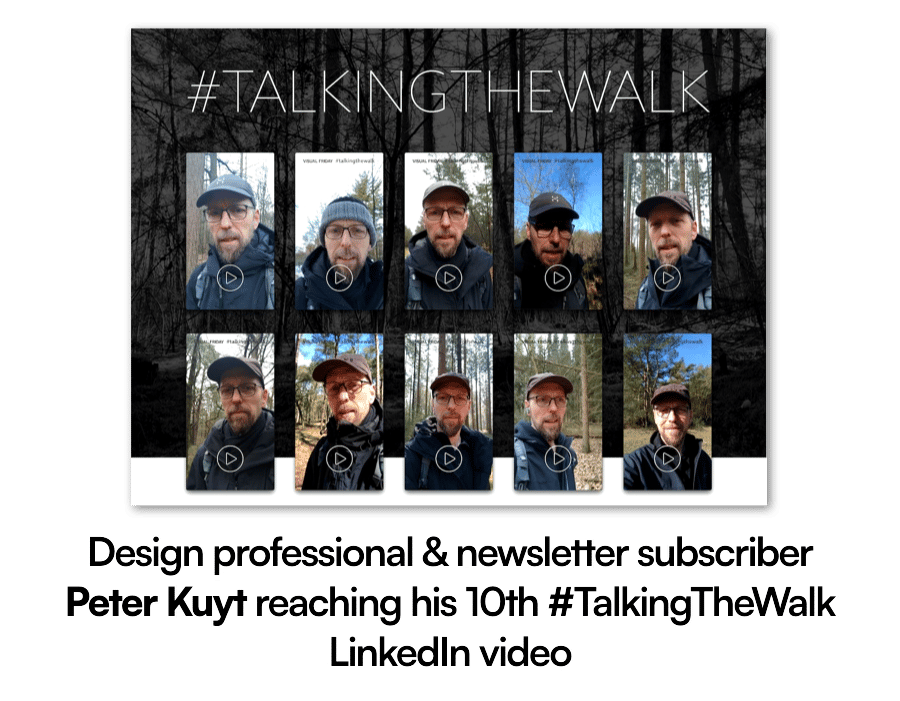
And he's built a community of engaged fans who tune in for every video. It's engaging, thoughtful and personable content.
Upon sharing his tenth video, he reflected on how walking in nature helps him access and articulate deeper thoughts:
"Walking in nature has always been helpful in reflecting and coming up with new perspectives. This self-imposed sharing challenge focuses my thinking more. When a thought surfaces, I play around with it longer until it's something coherent (in my view at least)"
— Peter Kuyt
And remember: if you're worried about feeling embarrassed recording yourself talking to your smartphone in public...
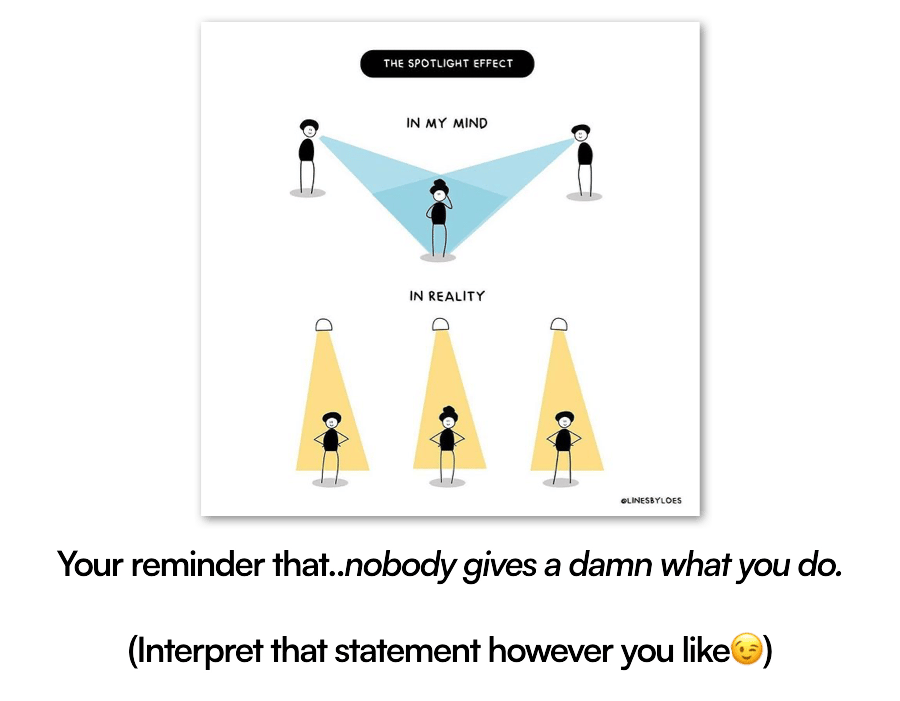
2. On a Video Call
The second way to capture yourself in an effortless state applies to those working in office-based or online environments involving video calls with clients or customers.
In short, record and re-purpose snippets of you as you share insights, examples, solutions, or anything your potential customers or professional community would also find valuable.
Of course, I'm not talking about sharing personal or confidential snippets—just snippets of educational-based content that showcase your natural energy and genuine expertise.
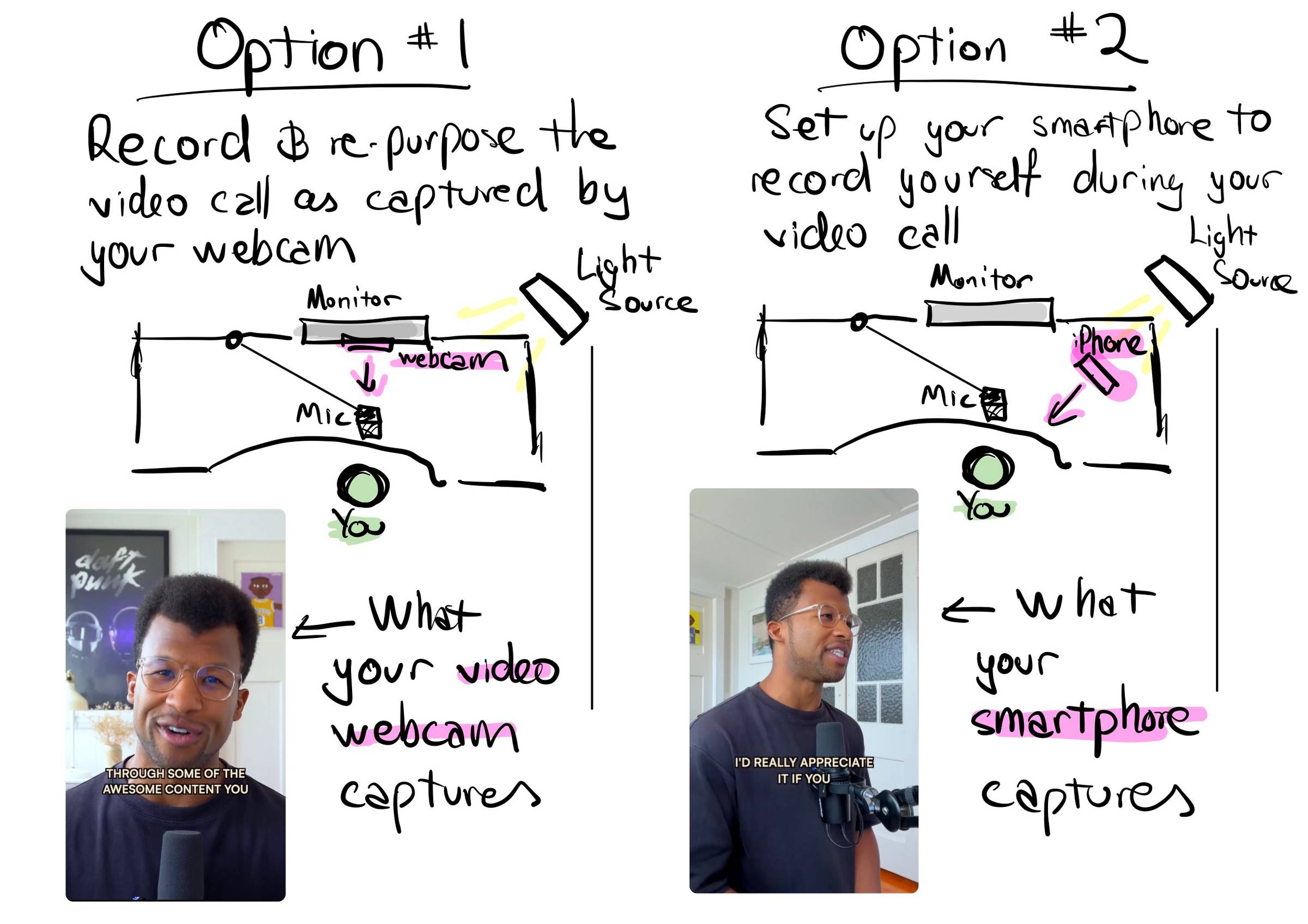
This is how I've captured so much content that clients have told me, "I really liked your vibe from your content," even though we've never met in person.
You might think recording yourself this way will feel weird in the moment, but trust me: once you start engaging with your client or customer, you'll forget that the camera is recording you because you'll be focused on engaging with the person on the other side of your video call.
2. Film Your Action
Now that we've captured an idea, thought or story, let's film you doing things that align with what you've mentioned in your talking footage.
With the help of creator and audio nomad Diveakssh 'Divi' Schae, I'll share 2 prompts as they relate to how you film your action:
- Position: Intimate Vs. Contextual
- Format: Real-time Vs. Timelapse
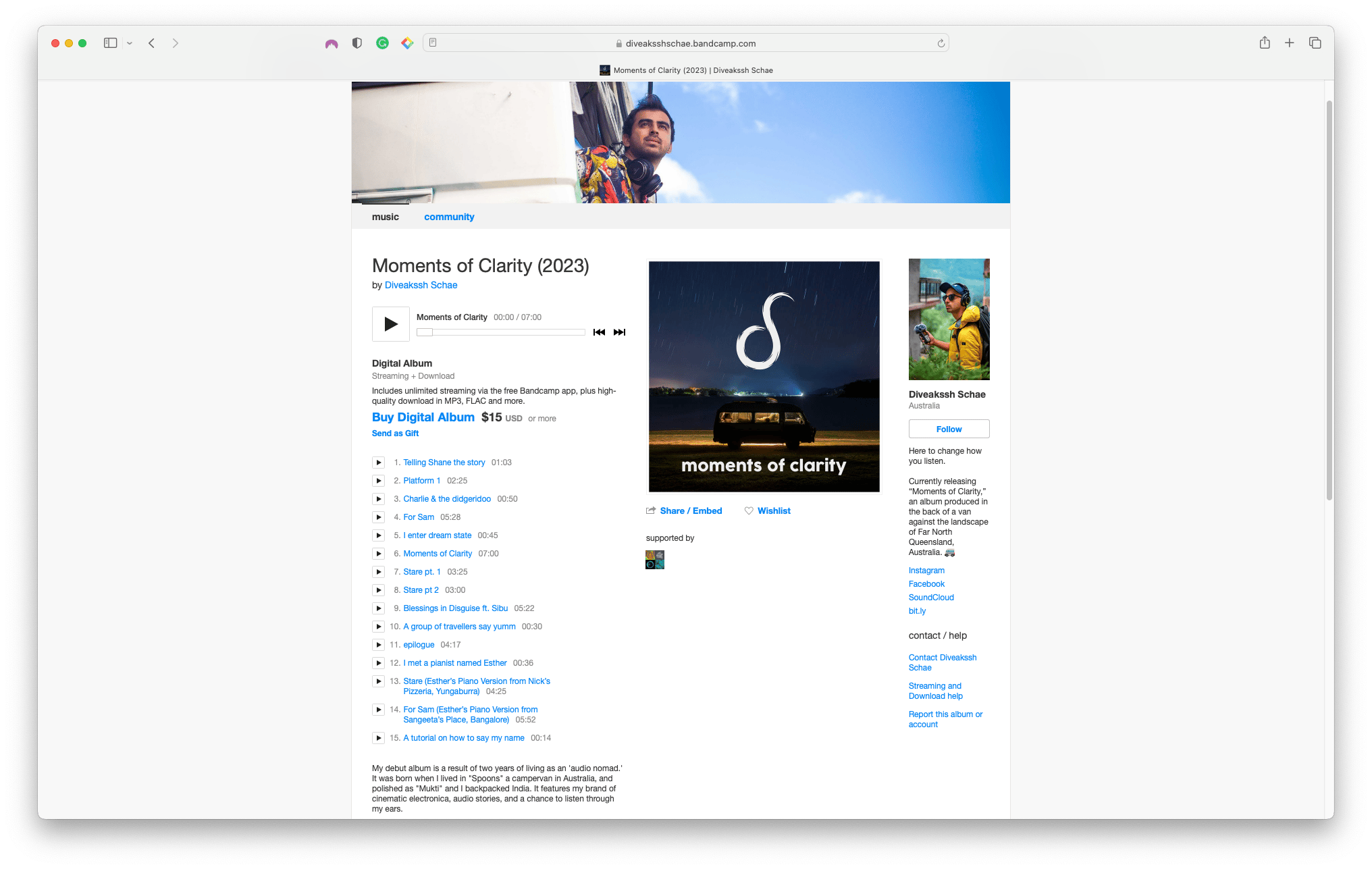
Position
Where do you want to position your viewer relative to you?
Instead of thinking about it as the position of your camera, think of it as the position of your viewer and how you'd like them to experience your scene.
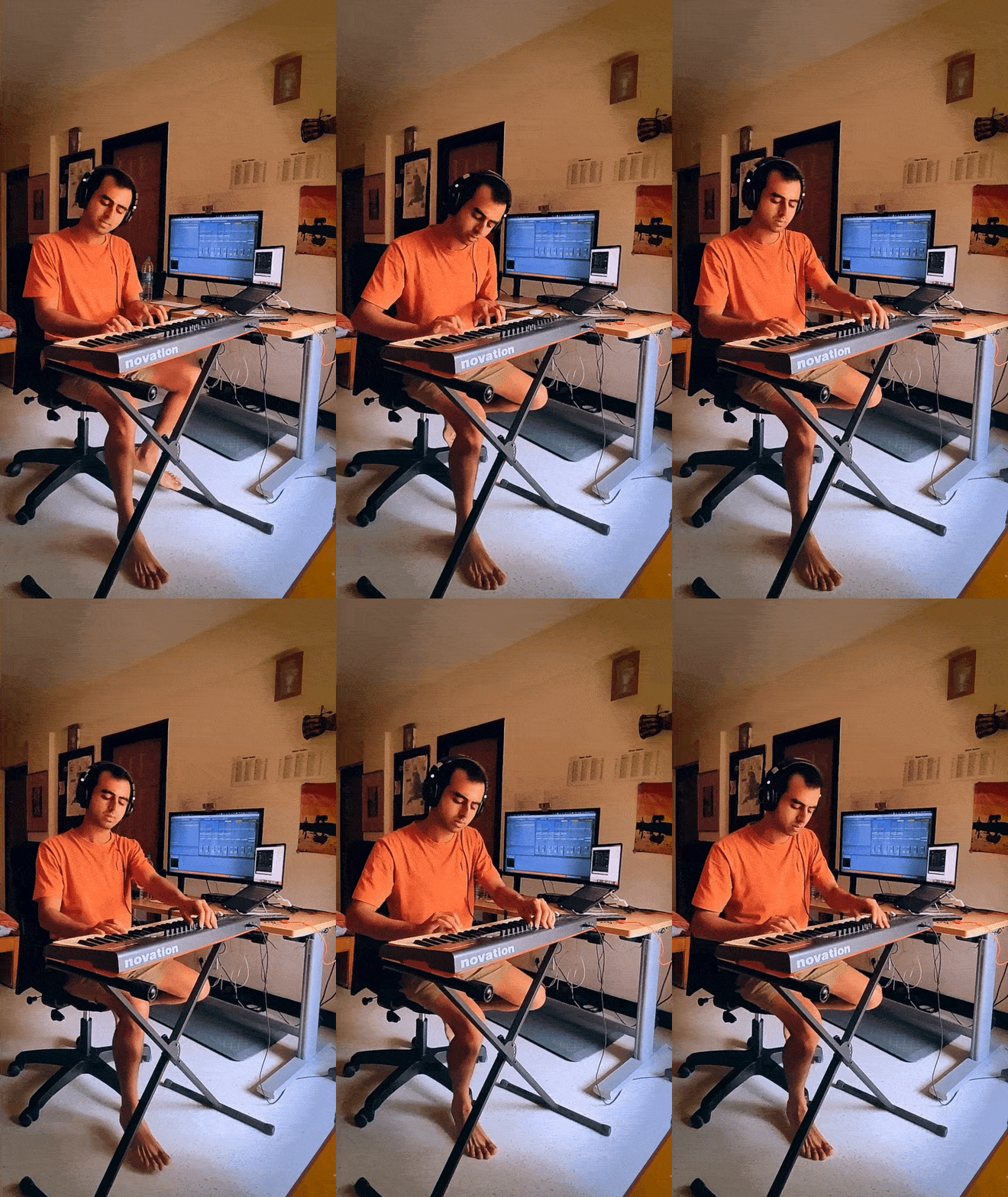
Intimate scene
A close-up shot of you showcasing your craft, product or service, typically within a few metres of you doing your thing.
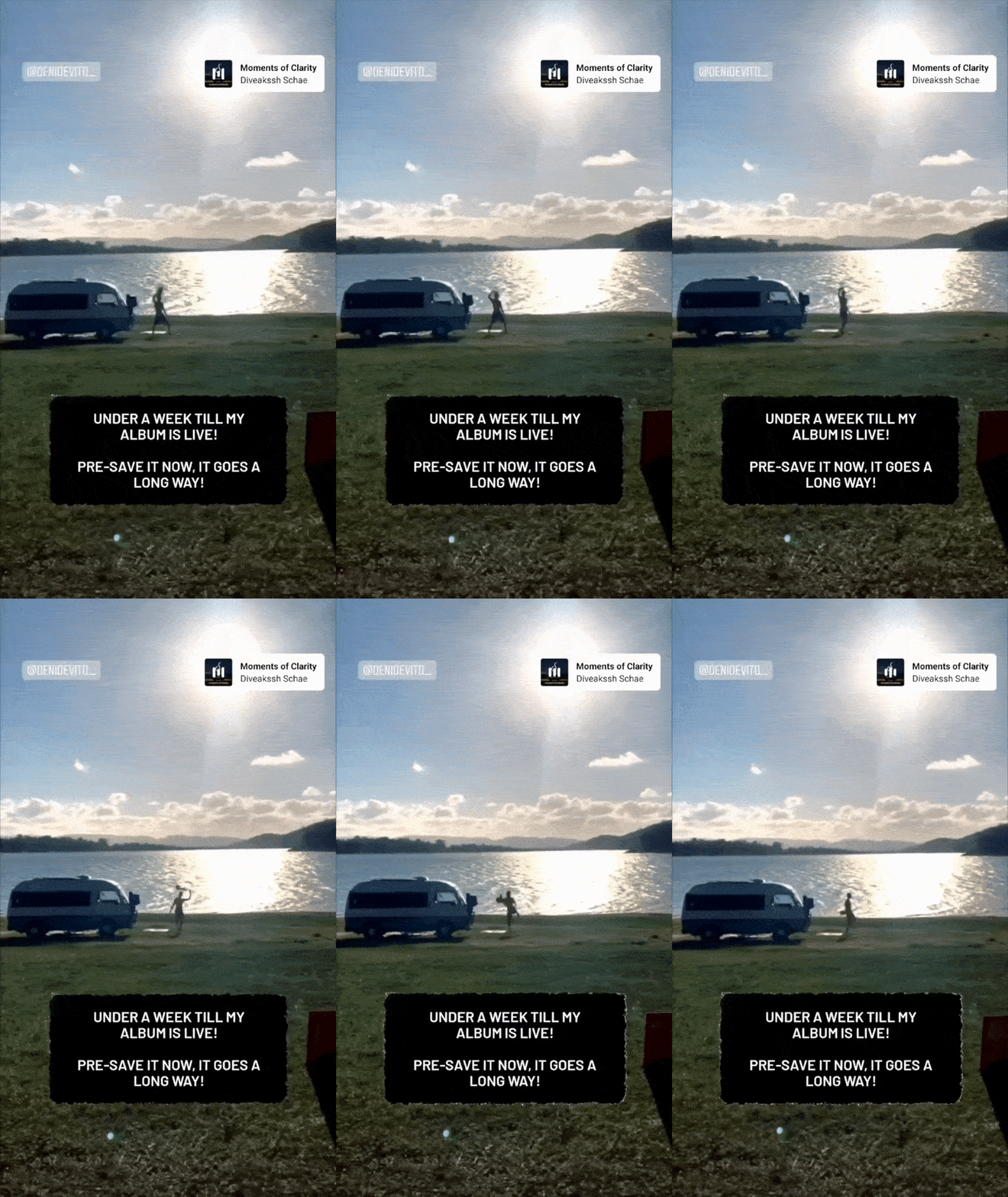
Contextual scene
You can also help your viewer better understand what you do by capturing a shot of you from further back that subtly communicates your lifestyle or location.
Format
How is the viewer experiencing your action?
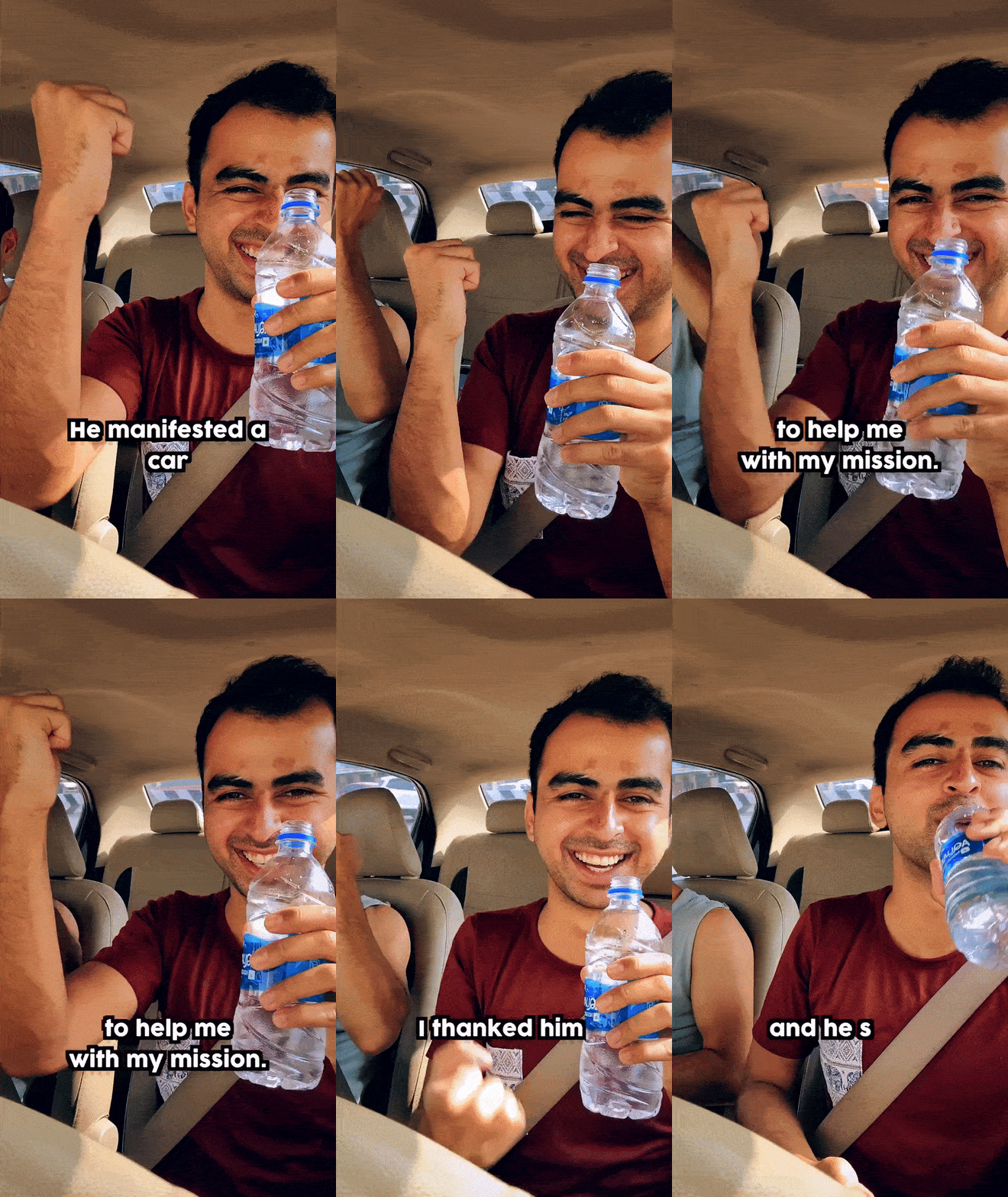
Real-time
This one's straightforward—use the standard video format on your smartphone camera to capture real-time moments.
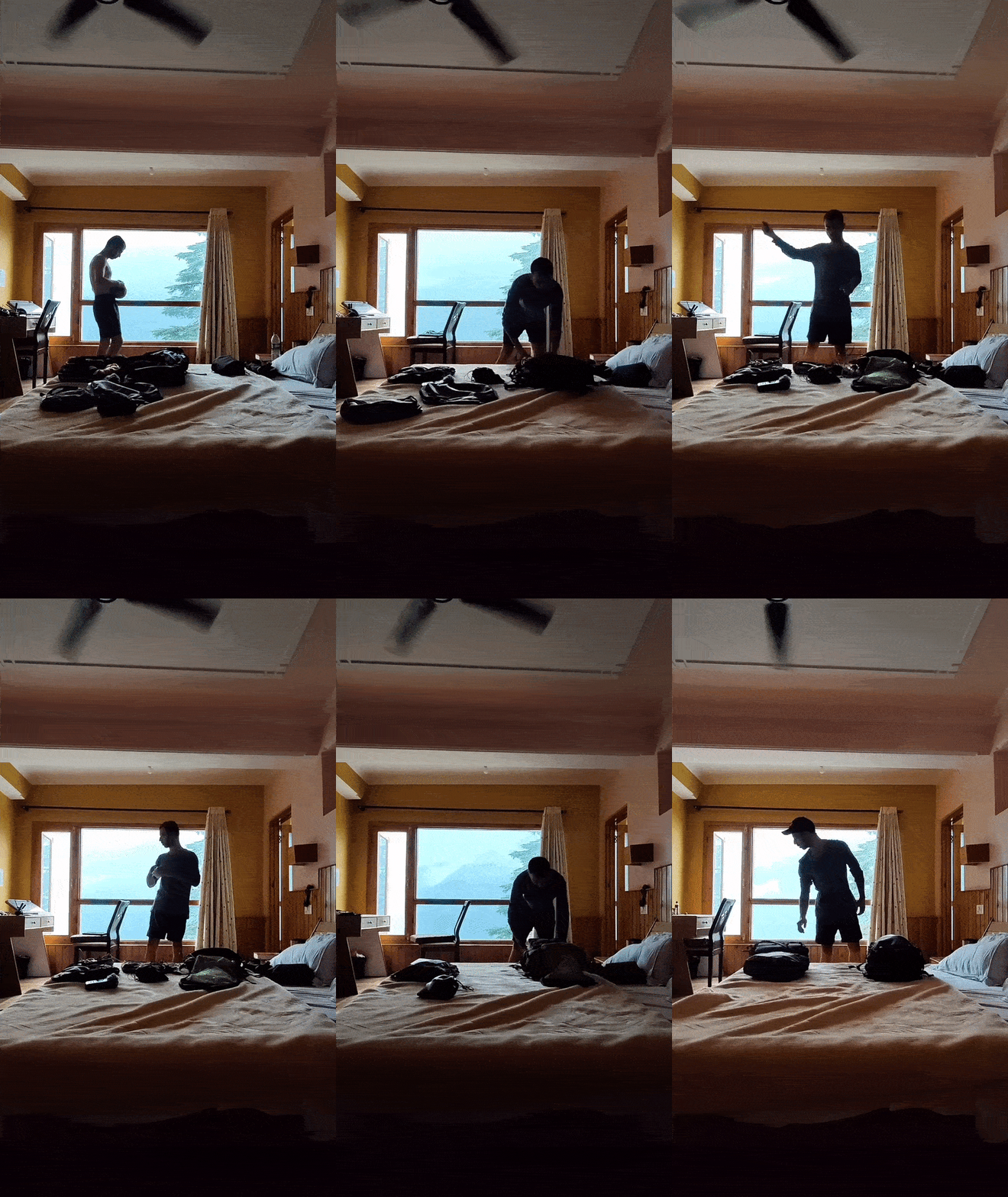
Timelapses
If you're capturing a process that takes time from start to finish, such as building something, creating a product, doing a routine or being in transit, a timelapse is a great way to make your viewer appreciate your process.
Be sure to:
- Place your smartphone in a steady position (use a tripod)
- Select the timelapse feature in your camera settings; and
- Make sure you've got plenty of battery and storage capacity and Do Not Disturb mode turned on
So, in summary, the 2 ways you can film yourself are:
- Talking (A-Roll): Walking or Video Calls
- In-Action (B-Roll): Positioned for intimacy or context, formatted for real-time or timelapses
"Document, don't create."
— Gary Vaynerchuk